Looking for a My Jump app alternative to measure your athletes’ vertical jump? The app developed by researcher Carlos Balsalobre-Fernández is the most studied jump measurement tool on smartphones. It films the jump in slow motion and calculates height from flight time. It’s reliable, inexpensive and very complete. Its limit is less about accuracy than workflow: every jump has to be filmed, then analyzed. On your own, that’s quick. With a group of fifteen players, it’s another story. In this article, you’ll find verified prices for My Jump 2 and My Jump Lab, what validation studies say, how video frame rate affects accuracy, and a practical comparison with an infrared sensor: time per test, group use, data obtained. Prices and specs checked on October 20, 2026.
Quick answer: My Jump 2 costs €19.99 as a one-time purchase on the App Store; My Jump Lab is free to download, with Premium features at €6.49 per month, €39.99 per year or €119.99 for life. Studies validate it against a force plate. The Jump Gate (€249.99) measures the same flight time by infrared at 1,000 Hz and displays the height on landing, without filming: it’s the fastest option for testing a group.
My Jump app price: My Jump 2 or My Jump Lab?
Two apps coexist. My Jump 2 is the older version, sold as a one-time purchase. My Jump Lab, presented by the developer as its successor, runs on a freemium model with Premium options and a 7-day trial.
| Plan | Price found | What it includes |
|---|---|---|
| My Jump 2 | €19.99 (one-time purchase)[1] | CMJ, SJ, drop jump, CMJ with arm swing; RSI and stiffness on drop jump; force-velocity profile; spreadsheet export |
| My Jump Lab, monthly Premium | €6.49/month[2] | More tests (modified RSI, asymmetries, 10-5, horizontal jump), AI-based measurement, sprint, bar speed, PDF reports, multiple profiles |
| My Jump Lab, annual Premium | €39.99/year[2] | |
| My Jump Lab, lifetime Premium | €119.99[2] | |
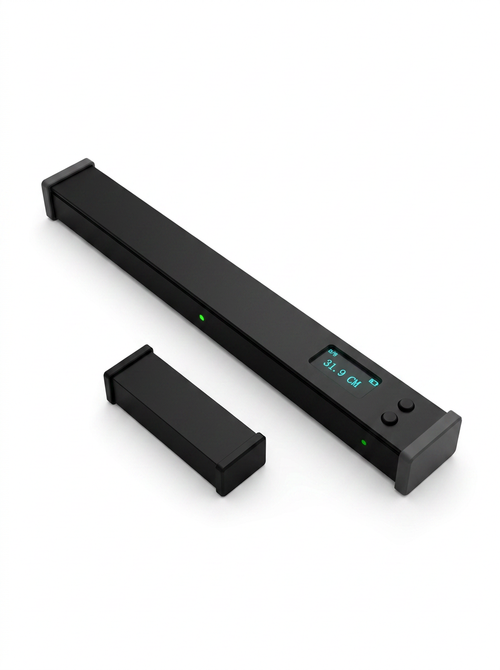
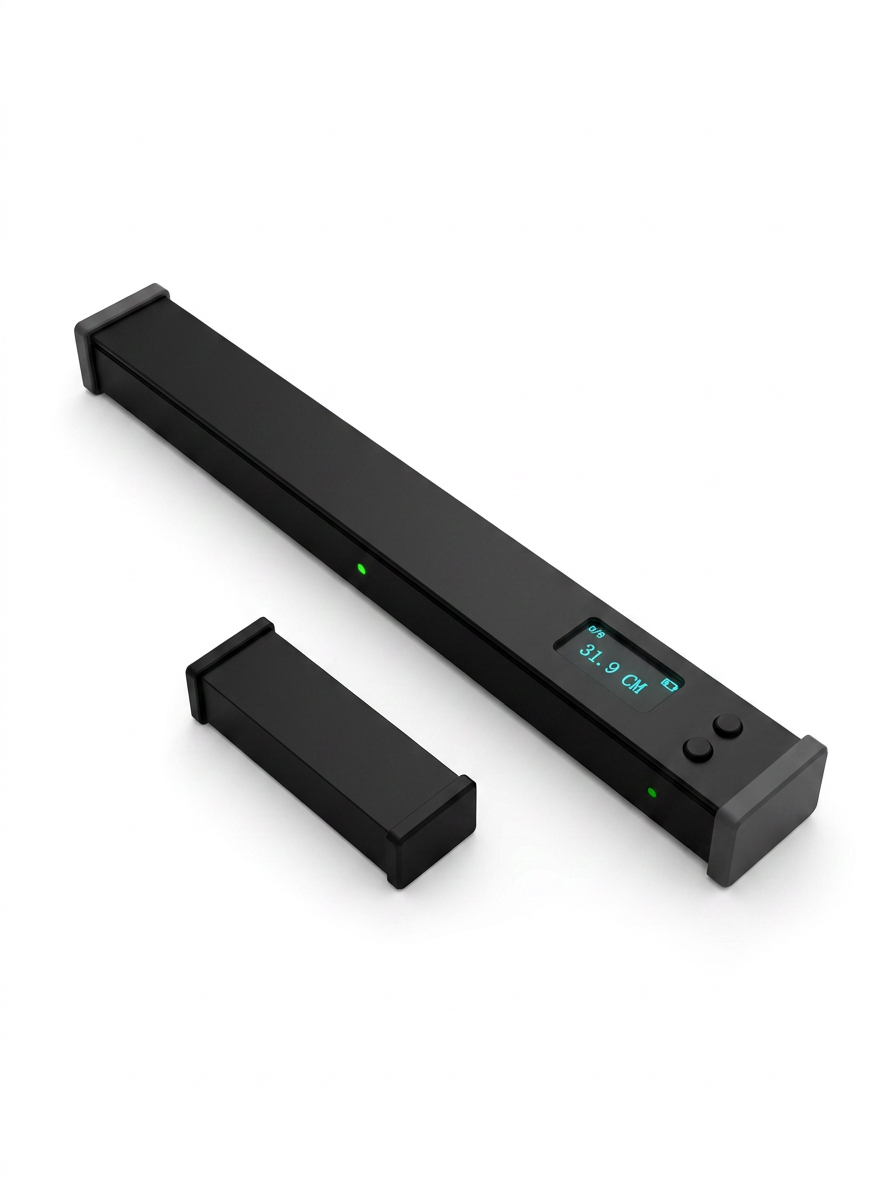
| Jump Gate | €249.99, free app | Height, contact time, RSI, repeated jumps; built-in display; history per athlete, no subscription |
Prices checked on the French App Store. My Jump Lab is also available on Google Play. On cost alone, the app remains cheaper than a sensor: even the lifetime purchase comes to less than half the price of the Jump Gate. So the choice is made elsewhere, on time and on how you work.
How does My Jump measure the jump?
The app films the jump in slow motion. The user (or, in My Jump Lab, artificial intelligence) marks the takeoff frame and the landing frame. The number of frames between the two gives the flight time, converted into height using the ballistic formula. It’s the same principle as optical bars or contact mats: only the sensor changes. We explain this formula in our article on calculating vertical jump from flight time.
Accuracy therefore depends on the camera’s frame rate. An error of a single frame at takeoff or landing translates into a height error. Here is the order of magnitude for a jump of about 30 cm (0.5 s of flight):
| Measurement rate | Duration of one frame | Height error for 1 frame |
|---|---|---|
| 30 frames/s | 33.3 ms | about 4.1 cm |
| 60 frames/s | 16.7 ms | about 2.0 cm |
| 120 frames/s | 8.3 ms | about 1.0 cm |
| 240 frames/s | 4.2 ms | about 0.5 cm |
| 1,000 Hz sensor | 1 ms | about 0.1 cm |
Calculation: error ≈ g × t ÷ 4 × duration of one frame. My Jump 2 records up to 240 frames per second[1]. Used with a recent phone at maximum slow motion, it stays within a margin compatible with tracking progress.
What do studies say about My Jump’s accuracy?
My Jump is one of the best-documented sports apps. The main findings:
- CMJ height: the 2015 validation study found near-perfect agreement with a force plate, with a mean difference of about 1 cm[3].
- Drop jump and RSI: in 14 students, the correlation with the force plate reaches 0.94 (20 cm drop) and 0.97 (40 cm) for RSI, and 0.96 to 0.98 for contact time[4].
- Overview: a meta-analysis of 21 studies found no significant difference from reference methods, and near-perfect reliability. Its authors note that these conclusions apply to flight-time measurements[5].
- AI mode: in 12 participants, the Lab version shows a correlation above 0.91 with two force plates for CMJ height, force, velocity and power, and a coefficient of variation below 6%[6].
On accuracy, then, there’s no reason to switch tools. The small number of participants for the AI mode simply suggests keeping the same analysis mode from one session to the next.
Sensor or smartphone: analysis time and group use
The real difference shows up in the field. With an app, an operator has to hold the phone, frame the feet, film, then validate the analysis. With a sensor, the athlete jumps between two bars on the floor and reads their height.
| Step | Video app | Jump Gate |
|---|---|---|
| Setup | Phone on a tripod or handheld, framed at floor level | Two bars on the floor, ready in about ten seconds |
| During the jump | An operator films | No operator needed |
| Result | After marking the frames (manually or automatically) | Shown on the display on landing |
| Repeated jumps | One contact and one flight to mark per rebound | Every contact and every flight measured continuously |
| Recording | Profiles in the app | History per athlete in the free app, PDF and CSV export |
Take a common test: 15 players, 3 CMJs each, so 45 jumps. With an app, that’s 45 videos to validate, and an operator tied up for the whole session. With a sensor, players go one after another and the coach notes or records the results as they go. The gap grows even wider on rebound tests, where each jump multiplies the moments to mark.
Conversely, for a single athlete testing once a week, video takes little time and requires nothing more than a phone.
Which vertical jump measurement option should you choose: app or sensor?
My Jump Lab goes beyond jumping: sprint, bar speed, mobility, wellness questionnaires. For a user who wants to do everything with their phone, that’s a real strength. The Jump Gate focuses on jump tests: CMJ, squat jump, drop jump and repeated reactive jumps, with height, ground contact time and RSI.

| Your situation | Best-suited tool |
|---|---|
| Solo athlete, small budget, occasional tests | My Jump 2 or My Jump Lab |
| Need sprint, bar speed and jump in a single app | My Jump Lab Premium |
| Strength coach or club, weekly group testing | Jump Gate |
| Physical therapist, drop jumps and repeated rebounds in session | Jump Gate |
| Comparison with a lab reference | See our Optojump and alternatives comparison |
The two tools can also coexist: app for an athlete on the road, sensor for group tests. Just don’t compare numbers obtained with two different methods.
Conclusion
My Jump is an accurate, validated app at a low price: €19.99 for My Jump 2, or €39.99 per year for My Jump Lab’s Premium features. It works well for a solo athlete. As soon as you test a group, or chain drop jumps and rebounds, the time spent filming and validating each video becomes the real constraint. An infrared sensor removes that step: height, contact time and RSI are displayed on landing. To build your tests, follow our guide to measuring and improving your vertical jump, then benchmark your athletes with the average vertical jump values by age and sport.
Frequently asked questions
Is the My Jump app free?
My Jump Lab is free to download, but the Premium features are paid: €6.49 per month, €39.99 per year or €119.99 for life on the French App Store, with a 7-day trial. My Jump 2 sells for €19.99 as a one-time purchase.
Does My Jump work on Android?
Yes, My Jump Lab is available on Google Play as well as the App Store. Check that your phone films slow motion at a high frame rate: the higher it is, the finer the flight-time measurement.
What is the difference between My Jump 2 and My Jump Lab?
My Jump 2 is the older version, a one-time purchase, focused on vertical jumps and the force-velocity profile. My Jump Lab adds new tests, automatic AI-based measurement, sprint and bar speed, on a subscription or lifetime purchase model.
Can you measure your vertical jump without an app or sensor?
Yes, with the wall-mark test: you measure the height reached with your arm extended, then while jumping. It’s free but not very reproducible, and it gives neither contact time nor RSI. To track progress of 1 to 2 cm, a flight-time measurement is still necessary.
Sources (accessed October 20, 2026)
- App Store France — My Jump 2
- App Store France — My Jump Lab
- Balsalobre-Fernández, Glaister and Lockey (2015), Journal of Sports Sciences
- Haynes et al. (2019), Journal of Sports Medicine and Physical Fitness
- Gençoğlu et al. (2023), Scientific Reports, My Jump meta-analysis
- Balsalobre-Fernández and Varela-Olalla (2024), Sensors, My Jump Lab and artificial intelligence
My Jump is a trademark of its owner. Comparison based on public information available on the date indicated.