Quick answer: the Optojump Next costs about €3,700 including VAT for one meter with software and camera[1]. It measures flight time and contact time at 1,000 Hz. The Jump Gate, an Optojump alternative, uses the same principle (infrared bars, 1,000 Hz) for €249.99, with a built-in display and a free app. The other alternatives: a video app (€39.99 per year or €119.99 for life), a contact mat (about €230 excl. VAT) or a force plate (price on request).
The Optojump is used in many professional clubs, academies and labs. Its validity is well documented: compared with a force plate, it gives very similar jump heights (ICC of 0.997 to 0.998), with a mean difference of about 1 cm[2]. But not everyone needs a modular system capable of covering an entire track. To measure vertical jumps, several Optojump alternatives exist, at very different prices.
How much does an Optojump cost?
The Optojump Next consists of two one-meter bars (one transmitter, one receiver), each fitted with 96 LEDs, with 1,000 Hz acquisition and a resolution of about 1 cm[1][3]. A French retailer lists it at €3,699 including VAT for one meter, camera pack, tripod and software included[1]. Additional meters allow running stride analysis, which drives up the price for long configurations.
Its strength is versatility: jumps, strides, gait tests, video sync. If you only use jump tests, you’re paying for features you don’t need.
Optojump alternatives: comparison of vertical jump measurement tools
| Tool | Approximate price | Method | Strengths | Limitations |
|---|---|---|---|---|
| Optojump Next (1 m) | ≈ €3,700 incl. VAT[1] | Optical bars, 1,000 Hz | Validated reference, stride analysis, video | Price, computer required |
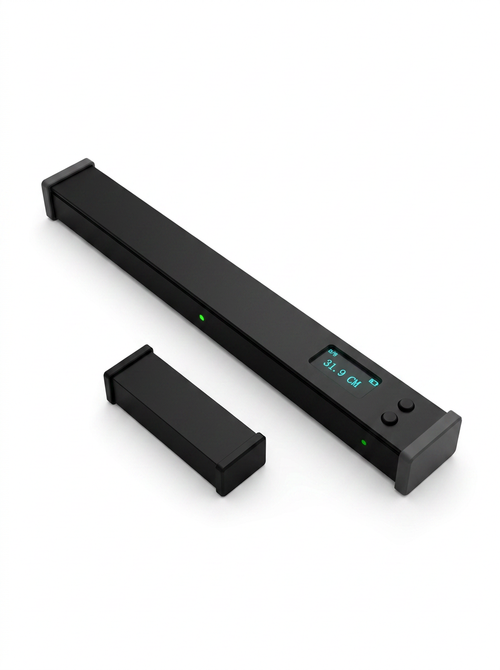
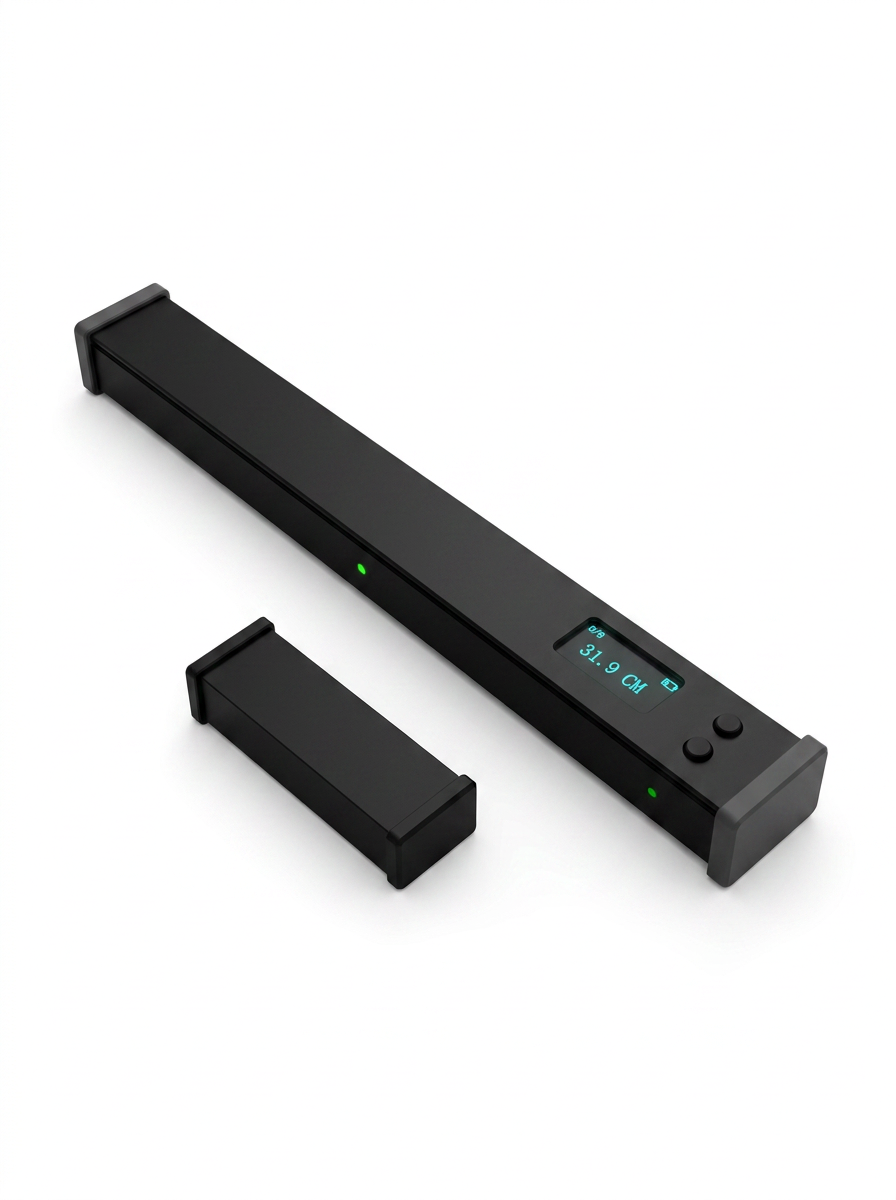
| Jump Gate | €249.99 | Infrared bars, 1,000 Hz | Built-in display, no calibration, free app | Jump tests only |
| My Jump Lab (app) | €6.49/month, €39.99/year or €119.99 for life[4] | Slow-motion video | Low cost, scientifically validated[5] | Every jump filmed and analyzed, paid Premium features |
| Chronojump (A2 contact mat kit) | €230.26 excl. VAT[6] | Foot contact | Open-source software, good reliability | Computer connected by cable |
| Vertec (vane jump tester) | $750[7] | Height reached | Simple, includes arm swing | Bulky, no contact data |
| Force plates (Hawkin, VALD…) | Price on request; VALD as a 3-year subscription[8][9] | Ground reaction forces | Power, asymmetries, jump phases | Price, subscription model |
Jump Gate or Optojump: what are the differences?
Both rely on the same physical principle: an infrared beam between two bars on the floor, broken by the feet at takeoff and landing, sampled 1,000 times per second. Flight time is converted into height using the ballistic formula (see our article on calculating vertical jump height).
The differences are about use:
- Reading: the Jump Gate displays the result on its built-in screen, without a computer or phone. The Optojump goes through software on a computer.
- Data: both measure height, contact time and the reactive strength index (RSI). The Jump Gate spec sheet also lists a left/right asymmetry measurement. The Optojump adds stride analysis over several meters and video sync.
- Tracking: the Powereact app, free with no subscription, keeps the history per athlete and exports to PDF or CSV.
- Price: €249.99 versus about €3,700.
If what you need is instrumented running and gait analysis, the Optojump remains the right tool. If what you need is to test jumps every week, in the field, with several athletes, the Jump Gate covers the essentials for a fraction of the price.

How much does each option cost over 3 years?
The purchase price isn’t enough: an app is paid every year, a mat needs a computer. Here is the 3-year cost for jump testing, at prices checked on October 10, 2026:
| Option | 3-year cost | Additional equipment needed |
|---|---|---|
| Optojump Next 1 m | €3,699 incl. VAT[1] | Computer |
| Chronojump A2 kit | €230.26 excl. VAT, about €276 incl. VAT[6] | Computer |
| My Jump Lab, annual subscription | 3 × €39.99 = €119.97[4] | Smartphone with slow motion |
| My Jump Lab, lifetime purchase | €119.99[4] | Smartphone with slow motion |
| Jump Gate | €249.99 incl. VAT, free app | Nothing: built-in display |
On price alone, the video app remains the cheapest. The choice therefore comes down to time spent per test and the number of athletes. With a group, optical bars skip the video analysis step; on your own, the app is often enough.
Is a video app like My Jump accurate enough?
Yes, for jump height. The 2015 validation study found a correlation of 0.995 with a force plate, with a mean difference of 1.1 cm[5], and a 2023 meta-analysis of 21 studies found no significant difference from reference methods, with near-perfect reliability[10].
The limit is practical: you have to film every jump in slow motion, then mark the takeoff and landing frames. With one athlete, that’s quick. With a group of fifteen players and three trials each, it turns into a video analysis session. Optical bars give the result on landing.
Do you need a force plate?
A force plate measures the forces applied to the ground at every instant. It gives power, rate of force development and the distribution between the right and left leg. That data is valuable in research and advanced return-to-performance work. The main manufacturers don’t publish their prices: Hawkin Dynamics directs you to its sales team, VALD works on a 3-year subscription[8][9]. To track height, contact time and RSI, a flight-time system is enough.
Which tool should you choose for your profile?
| Profile | Recommended tool |
|---|---|
| Solo athlete, small budget | Video app or Jump Gate |
| Strength and conditioning coach, weekly group testing | Jump Gate |
| Physical therapist, return-to-sport monitoring | Jump Gate (height, contact, RSI); force plate if you need detailed forces |
| Lab, running analysis | Optojump or force plate |
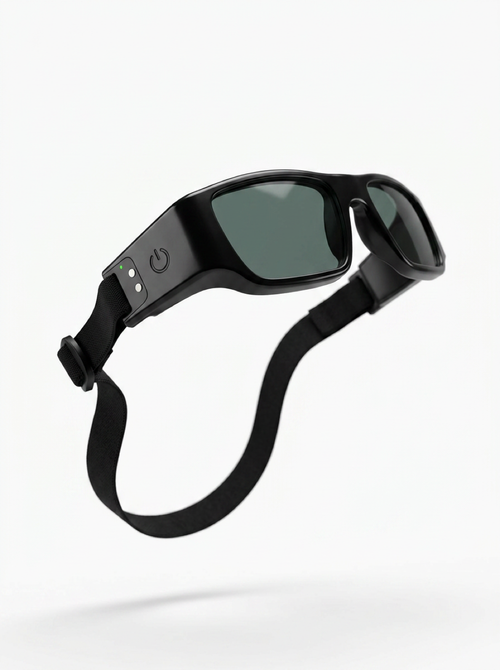
To get your testing off to a good start, follow our guide how to measure and improve your vertical jump, and compare your results with the average vertical jump values by sport. The Jump Gate is also offered with reaction lights in the Explosiveness Pack (from €548.99), and with reaction lights and strobe glasses in the Elite Pack (from €698.99).
Frequently asked questions
What is the difference between Optojump and a contact mat?
The mat detects the pressure of the feet on its surface; the Optojump detects the interruption of a light beam between two bars. Both measure flight time. The bars don’t require a special surface.
Is the Jump Gate compatible with Optojump software?
No. The Jump Gate works with its built-in display and the Powereact app, free on iOS and Android.
Does the Jump Gate measure RSI?
Yes. It measures jump height, ground contact time and the reactive strength index, for CMJ, squat jump, drop jump and repeated reactive jump tests.
Is there a free alternative to Optojump?
The wall-mark test is free but not very accurate. The cheapest reliable options are video apps (with a subscription) and the Chronojump contact mat, whose software is open source.
Sources (accessed October 10, 2026)
- mtraining.fr — Optojump Next 1 m
- Glatthorn et al. (2011), Journal of Strength and Conditioning Research
- Topend Sports — Optojump
- App Store — My Jump Lab
- Balsalobre-Fernández et al. (2015), Journal of Sports Sciences
- Chronojump — Contact Platform Kit
- Sports Imports — Vertec
- Hawkin Dynamics
- VALD — pricing model
- Scientific Reports (2023), My Jump meta-analysis
Optojump, Microgate, My Jump, Chronojump, Vertec, Hawkin Dynamics and VALD are trademarks of their respective owners. Comparison based on public information available on the date indicated.