The Bosco test is a battery of vertical jumps developed by Italian physiologist Carmelo Bosco and his Finnish colleagues in the early 1980s. The principle is simple: each jump loads the leg muscles in a different way, and it is the comparison between jumps, more than any single result, that tells you about the athlete. A weak squat jump with a decent CMJ does not mean the same thing as a squat jump and CMJ that are both high. Strength and conditioning coaches, physical therapists and trainers use it to steer a strength or plyometric program, or to track a return to play. In this article, you will find the five jumps of the battery, the step-by-step protocol, the formulas (height, indexes, 15-second repeated-jump power) and sourced reference values to rank your athletes.
In short: the Bosco test chains a squat jump, a countermovement jump (CMJ), a CMJ with arm swing, a drop jump and 15 seconds of continuous jumps. Height is calculated from flight time (h = g × t² ÷ 8). From there you get the CMJ – squat jump difference, the drop jump RSI and a mean power output in W/kg over 15 s: above 35 W/kg, an adult male athlete ranks in the top category of a Finnish rating scale.
What is the Bosco test?
In 1983, Bosco, Luhtanen and Komi published a method to measure mechanical power in jumping without a force plate. All you need is to time the flight time of each jump and count the jumps completed over a fixed duration, from 15 to 60 seconds[1]. The original device, the Ergojump, is a contact mat connected to a timer. The open-source software Chronojump is even named Boscosystem in tribute to this method[2].
Over time, Bosco's name came to refer to the whole battery: the single jumps (squat jump, CMJ, CMJ with arm swing, drop jump) and the continuous jumps. They all rely on the same calculation, height derived from flight time. To compare the tools that can measure it, from video apps to mats, see our comparison Chronojump or Jump Gate.
The Bosco test does not replace a medical assessment. In rehab, the choice of jumps and drop heights belongs to the physical therapist or physician.
The 5 Bosco test jumps: squat jump, countermovement jump, drop jump
| Jump | Execution | What it tells you |
|---|---|---|
| Squat jump (SJ) | Hands on hips, knees bent to about 90°, position held about 3 s, then jump with no countermovement | Force produced in pure concentric push, with no momentum |
| Countermovement jump (CMJ) | Hands on hips, quick dip then maximal jump | Explosiveness with countermovement |
| CMJ with arm swing (Abalakov) | Same jump, free arm swing | Arm-leg coordination |
| Drop jump (DJ) | Drop from a box, immediate rebound as high and as fast as possible | Reactivity: ground contact time, RSI |
| Continuous jumps 15 s | Repeated jumps at maximal effort, hands on hips | Mean power and ability to sustain it |
The no-movement cue in the squat jump is essential: a 2017 review describes a position held about 3 seconds before the jump, and points out that a small unintentional countermovement can strongly skew the result[3]. The long version of the continuous jumps, over 60 seconds, measures fatigue resistance more; it is harder and reserved for trained athletes.
Bosco test protocol step by step
- Standardized warm-up: always the same from one test to the next (jogging, mobility, a few submaximal jumps).
- Fixed order: squat jump, CMJ, CMJ with arm swing, drop jump, then continuous jumps. The least fatiguing jumps go first.
- Three trials per jump, 30 to 60 seconds of rest between trials, a little more between two jump types.
- Land with straight legs, toes first: tucking the legs in the air lengthens flight time and overestimates height.
- Drop jump: pick a drop height and stick with it. In professional basketball players, RSI proved highly reliable from 20, 40 and 50 cm[4]. Cue: “spend as little time on the ground as possible and jump as high as possible.”
- 15 s continuous jumps: knee bend close to 90° on each contact, maximal effort from the first to the last jump, count the number of jumps and the total flight time[1][5].
- Same surface, same shoes, same device at every test.
For single jumps, keep the average of the three trials: it tracks readiness better than the best trial. The Jump Gate measures height, ground contact time and RSI on every jump, including during repeated reactive jumps, and the free app saves the history for each athlete.
Bosco test calculations: height, indexes and power
Height
Each height is derived from flight time t: h = g × t² ÷ 8, or about 1.226 × t² (h in meters, t in seconds). We break down this formula and its pitfalls in our article on calculating vertical jump height.
Indexes between jumps
| Index | Formula | Example |
|---|---|---|
| CMJ – SJ difference (%) | (CMJ − SJ) ÷ SJ × 100 | SJ 35 cm, CMJ 39 cm: 11.4% |
| Arm swing contribution (%) | (CMJ arms − CMJ) ÷ CMJ × 100 | CMJ 39 cm, CMJ arms 45 cm: 15.4% |
| Drop jump RSI | height (m) ÷ contact time (s) | 0.32 m in 0.200 s: 1.6 |
The CMJ – SJ difference was long called the “elasticity index.” Recent research calls for caution: a large difference can also reflect a weak squat jump rather than good use of the countermovement[3][6].
15-second repeated-jump power
Bosco's formula gives a mean power output per kilogram of body weight[1][5]:
P (W/kg) = g² × Tv × Tt ÷ [4 × n × (Tt − Tv)]
Tv is the total flight time, Tt the test duration and n the number of jumps. Example: 16 jumps in 15 s, with 8.0 s of cumulative flight time (0.5 s per jump, or about 31 cm), give 9.81² × 8.0 × 15 ÷ (4 × 16 × 7.0) ≈ 25.8 W/kg. In the 60 s version, you also compare the mean height of the first 15 and the last 15 seconds to estimate fatigue.

Bosco test reference values and interpretation
For the continuous jumps, a Finnish rating scale published by Topend Sports ranks adult male athletes by mean power[5]:
| Category | Jumps 15 s (W/kg) | Jumps 60 s (W/kg) |
|---|---|---|
| 1 (lowest) | under 25.0 | under 20.0 |
| 2 | 25.1 to 28.3 | 20.1 to 23.3 |
| 3 | 28.4 to 31.6 | 23.4 to 26.6 |
| 4 | 31.7 to 34.9 | 26.7 to 29.9 |
| 5 (highest) | over 35.0 | over 30.0 |
This scale is a guide only: it covers adult male athletes and depends on the equipment used. For the CMJ and squat jump, refer to our average vertical jump values by age, sex and sport.
For the CMJ – SJ difference, a study of 770 participants shows that the groups that jumped highest did not have the largest difference: it was highest in physical education students and lowest in speed skaters[6]. So always read this difference alongside the heights themselves:
- High SJ and CMJ, moderate difference: solid strength base, nothing urgent to fix.
- Low SJ, high difference: pure concentric strength is probably the first lever.
- Decent CMJ, low RSI: ground reactivity needs work (short-contact plyometrics).
- Clear drop-off across the jumps: the ability to repeat explosive efforts is limited.
Also in our vertical jump series
Conclusion
The Bosco test remains one of the most complete field batteries to describe explosiveness: five jumps, a single measurement principle, and comparisons that guide training. Its value depends on the protocol: fixed order, no movement before the squat jump, straight-leg landing, same drop height. Measure flight time with a reliable device: a mat, infrared bars or a validated app, such as My Jump, whose options we compare in our article app or sensor to measure your jump. To fit this assessment into a complete program, follow our guide to measure and improve your vertical jump.
Frequently asked questions
What jumps are in the Bosco test?
The battery includes the squat jump, the countermovement jump with hands on hips, the CMJ with arm swing (Abalakov), the drop jump from a box and continuous jumps over 15 seconds, sometimes 60 seconds. Each jump targets a different quality of explosiveness.
How do you calculate power in the Bosco test?
For the continuous jumps, use P = g² × total flight time × test duration ÷ [4 × number of jumps × (duration − total flight time)]. The result is expressed in watts per kilogram. Example: 16 jumps in 15 s with 8 s of flight give about 25.8 W/kg.
What equipment do you need for the Bosco test?
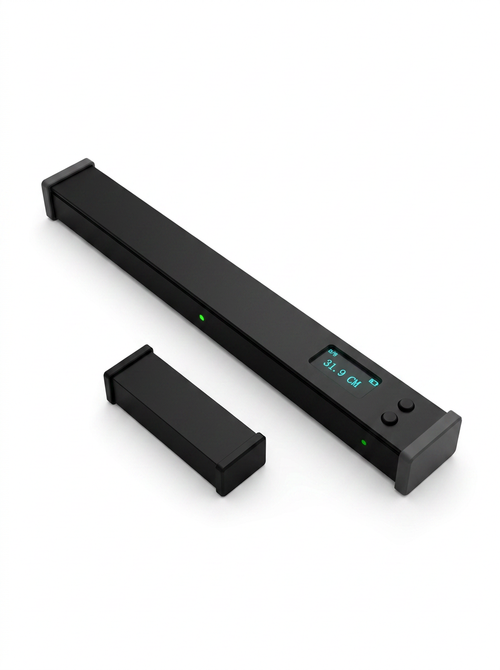
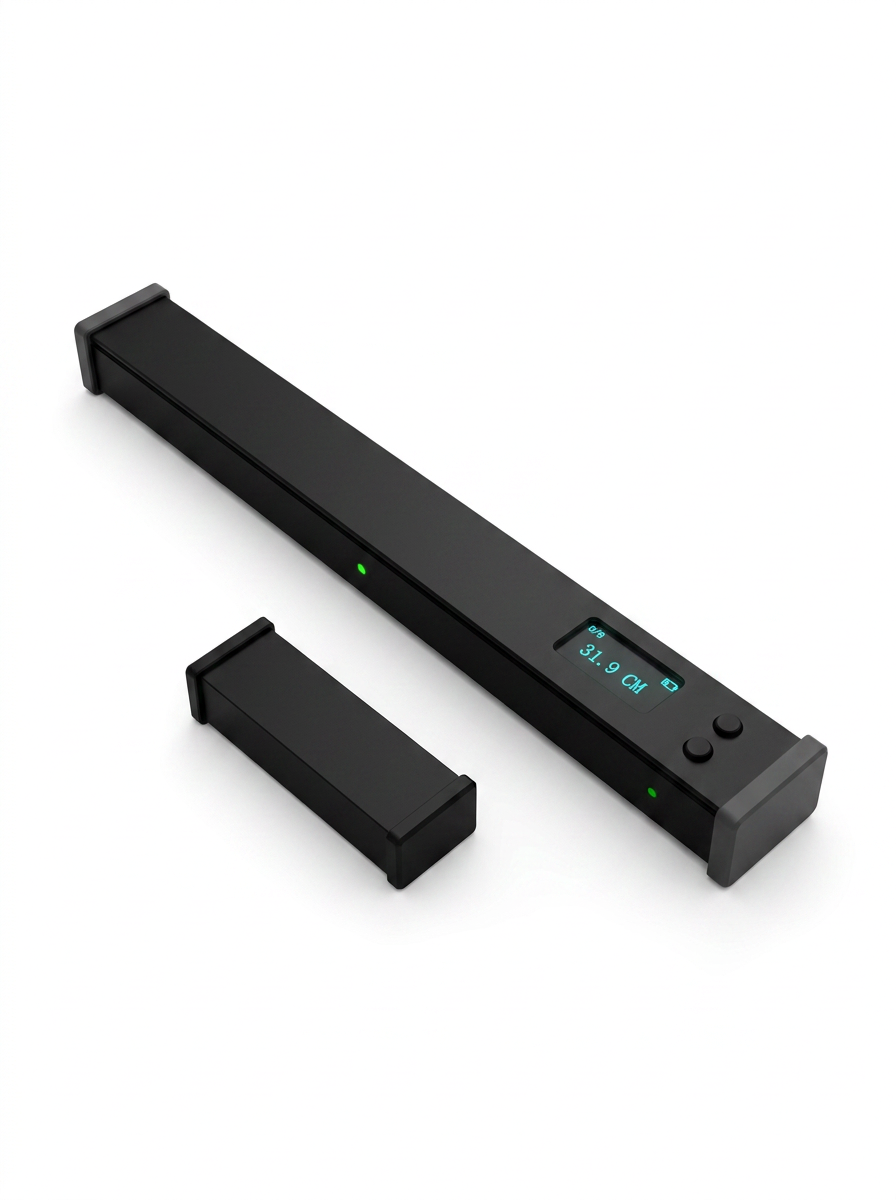
A device that measures flight time to the millisecond: a contact mat, infrared bars or a validated video app. For the drop jump, add a stable box of known height. A handheld stopwatch is not accurate enough.
How often should you repeat the Bosco test?
A full battery every 2 to 4 weeks, or at the end of each training block, is enough to steer a program. Between two assessments, a simple CMJ at the start of a session lets you monitor readiness and fatigue without adding load to the week.
Sources (accessed October 20, 2026)
- Bosco, Luhtanen and Komi (1983), European Journal of Applied Physiology
- de Blas et al. (2012), Revista Internacional de Ciencias del Deporte, Chronojump-Boscosystem
- Van Hooren and Zolotarjova (2017), Journal of Strength and Conditioning Research
- Markwick et al. (2015), International Journal of Sports Physiology and Performance
- Topend Sports — Bosco Repeat Vertical Jump (formula and rating scale)
- Kozinc et al. (2021), European Journal of Sport Science, 770 participants