In short: reaction lights for sports are used to train and measure reaction time, decision-making and footwork. To choose well, compare five criteria: detection mode (touch or motion), the app (free or subscription-based), the number of lights that can be connected, outdoor resistance and the total price over several years. Expect to pay from €319.99 (Powereact, 4 lights, free app) to €3,683 (Witty SEM, 4 lights) as of October 10, 2026.
A traditional cone shows a path. A reaction light gives an unpredictable command: it turns on without warning, with a color and sometimes a sound, and the athlete has to react. It is this unpredictability that turns an agility drill into a decision-making drill. And since every response is timestamped, the coach gets a number instead of an impression.
What are reaction lights (or reaction training lights) used for in sports?
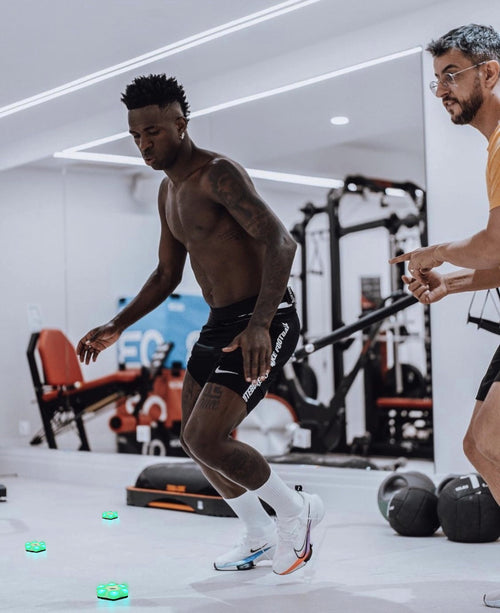
They train the perceive, decide, act chain, the one that makes the difference when the game moves fast:
- Reaction time: getting off the mark sooner on a signal.
- Visual discrimination: spotting the right signal among several colors.
- Decision-making: choosing a direction under pressure.
- Footwork and changes of direction: moving toward a target that changes on every rep.
- Clarity under fatigue: keeping an accurate reaction after an effort.
Studies on reaction light training show encouraging but variable results: a trial in 20 young basketball players aged 14-15 observed visual reaction time improved by 23 to 31% in the trained group, more than in the control group[1], while other trials, notably in young soccer players, find no clear advantage over traditional training[2]. The best-established benefit concerns older adults: a meta-analysis of seven trials shows that step training, voluntary or reactive, reduces the fall rate by about half after age 60[3]. The practical lesson: reaction lights are an effective tool when built into specific, measured work, not an effect in themselves.
Which drills can you do with reaction lights, sport by sport?
| Sport | Sample drill | What it trains |
|---|---|---|
| Soccer | 4 lights in a 5 m square, ball at feet: trigger the light with the foot then pass to a teammate | Scanning, directional first touch |
| Goalkeeper | Lights attached to the posts and crossbar, react and dive toward the called color | Reaction, first step |
| Basketball | Lights on the ground in an arc, defensive slides | Lateral footwork, defensive stance |
| Tennis, padel | Lights in the four corners of a reduced court, racket in hand, crossover steps back to the center | Recovery, reading the play |
| Boxing, combat sports | Lights on the wall at face and chest height, strike only the target color | Choice reaction, accuracy |
| Rugby, handball | Lights in a funnel, sprint toward the color then contact or pass | Decision-making on the run |
| Rehab | 2 to 4 lights close together, slow and controlled response, progressive intensity | Rebuilding footwork, confidence |
For a complete progression with sets and rest times, follow our program of 5 drills to improve your reaction time.

How to choose reaction lights for sports: the 5 criteria
1. Detection mode
Some lights only turn off on touch. Others detect nearby motion. Contactless detection lets you trigger a light with the foot, with a ball, or with a controlled movement in rehab. Touch, on the other hand, validates the trial unambiguously. Choose based on your drills.
2. The app and the subscription
This is the most often overlooked criterion. Several brands reserve athlete management, history or tests for a paid plan. Over three years, the subscription can cost more than the hardware. Also check the app's language and whether you can export your data (PDF, CSV).
3. Number of lights
Four lights are enough for a single athlete. Six to eight allow group stations and star drills. Twelve open up large spaces and one-on-ones. Note: with a Bluetooth connection, the maximum number of connected lights also depends on the phone you use.
4. Outdoor use
On a field, check the water resistance stated by each brand. Some lights withstand splashes; others, like Powereact pods, are for dry weather only. If your sessions take place outdoors year-round, this criterion matters as much as price.
5. Total price
Compare the kit price plus three years of the app. The differences between brands range from a few hundred to several thousand euros (public prices collected on October 10, 2026, excluding promotions):
| Brand | Public price, kit of 4 | App | Cost over 3 years | Detection |
|---|---|---|---|---|
| Powereact | €319.99 | Free, no subscription | €319.99 | Motion + vibration |
| BlazePod | €369[4] | Free + Pro €99.99/year[5] | €369 (free) to €668.97 (Pro) | Touch |
| FitLight | $999[6] | No subscription[6] | $999 + import | Motion + touch |
| Witty SEM (Microgate) | €3,683.05[7] | Dedicated control unit | €3,683.05 | Proximity sensor |
The Witty SEM price is from the reseller h/p/cosmos, with no mention of VAT; it includes tripods, clamps and a bag. FitLight sells in dollars: duties, VAT and shipping are added for France. Each brand has its strengths: Witty SEM has a 7 × 5 multicolor LED matrix, FitLight a range of 50 to 75 m, BlazePod more than 500 activities in its free version. For details, see our BlazePod comparison and our FitLight vs BlazePod comparison.
Reaction lights and physical therapy: what are the benefits?
In return-to-play training, reaction lights bring two things: an unpredictable stimulus, close to the demands of the field, and an objective measurement of the response. The physical therapist can compare the reaction time of the operated side and the healthy side, dose the intensity (distance, number of targets, lighting speed) and document the patient's progress session after session. The Clairefontaine Medical Center, at the French national soccer training center, uses Powereact reaction lights in rehab and return-to-play training.
Reaction lights are a training and measurement tool, not a medical device: the protocol remains the practitioner's.
How do you measure progress with reaction lights?
The advantage of a reaction light over a signal given by the coach is measurement. Every response is timestamped: you get an average time, a best time and, in choice drills, a number of errors. Three rules make these numbers useful:
- A fixed benchmark test, repeated every 2 to 4 weeks.
- The average of a set rather than the single best trial.
- The error rate read alongside time: getting faster while making more mistakes is not progress.
To put your athletes' results in context, see our article on average reaction time.
Reaction lights price: how much does a Powereact kit cost?
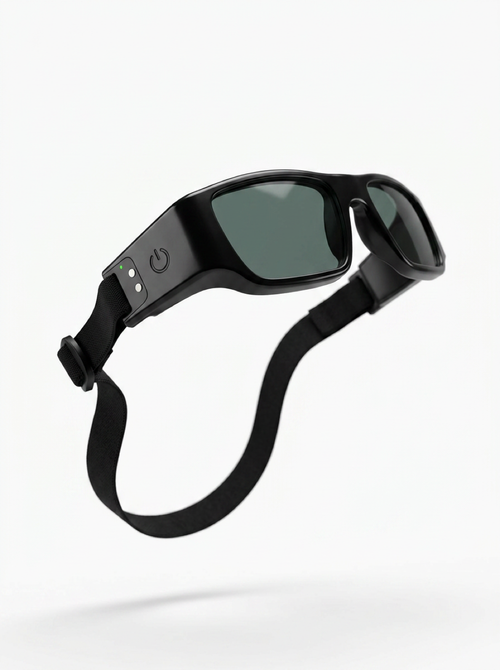
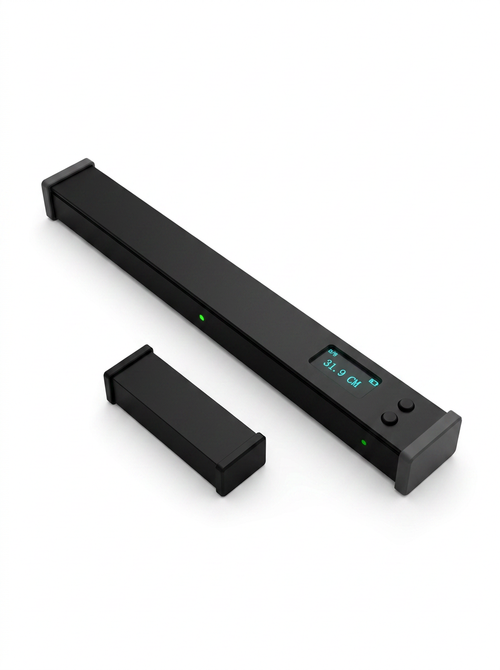
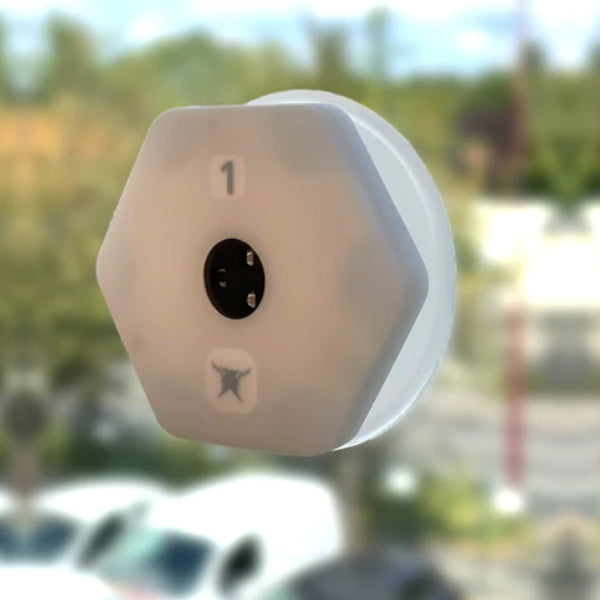
Powereact reaction lights cost €319.99 for 4 pods, €419.99 for 6, €519.99 for 8 and €839 for 12. The kit includes the pods, chargers, Velcro straps, zip ties, suction cups and a carrying case. The app is free on iOS and Android, with no subscription, and also controls the strobe glasses (€149.99) and the Jump Gate (€249.99). The packs combine the lights with these products: Perception Pack from €448.99, Explosiveness Pack from €548.99, Elite Pack from €698.99.
Frequently asked questions
What is the difference between a reaction light and a cone?
A cone shows a course known in advance. A reaction light gives an unpredictable signal and measures the response: you train decision-making, not just movement.
How many reaction lights do you need to get started?
Four lights are enough for individual use and most basic drills. Get six or eight lights to work with groups.
Are reaction lights suitable for kids?
Yes. The game-like feel, the colors and the timed challenge are very motivating for young players. Adjust the distance and the number of colors to their age.
Can you use reaction lights in the rain?
It depends on the model. Some lights withstand splashes; Powereact pods are not waterproof and are for use in dry weather. In all cases, avoid submerging them and dry the lights before charging.
Sources (accessed October 10, 2026)
- Hassan, Alhumaid & Hamad (2022), Sports: young basketball players, FITLIGHT
- Theofilou et al. (2022), Sensors: young soccer players, 6 months
- Okubo, Schoene & Lord (2017), British Journal of Sports Medicine
- BlazePod EU — Starter Kit
- BlazePod EU — Membership
- FitLight Training
- h/p/cosmos — Witty SEM (reseller)